
#



From Grief to Grace: How Bereavement Casting Training in Dorset Helped Laura Create Precious Treasures
Sometimes, the most meaningful things we create come from the most difficult experiences in our lives.
After losing her dad in 2017, Laura founded Talla’s Treasures. Through her own experience of loss, she came to understand how powerful it can be to hold onto a physical reminder of someone we love.
Her journey eventually led her to bereavement casting — and then from Wales to my private studio in Dorset for specialist training.
Laura’s Journey — From Wales to Dorset
By the time Laura travelled to Dorset, she had already been practising bereavement casting for four months.
Even so, she arrived feeling nervous and unsure. She was worried about making mistakes, wasting materials and, most importantly, getting things wrong when working on something that could never simply be repeated.
And that is one of the things that makes memorial casting so different.
These aren’t simply pieces of artwork. They are precious reminders of someone loved, often created during one of a family’s hardest moments.
With bereavement casting, there can be no second chance to capture a particular moment. Every detail matters.
That’s why specialist training isn’t just about learning how to mix materials or make a successful mould. It’s about developing the precision, preparation and confidence needed to work carefully and respectfully with families.
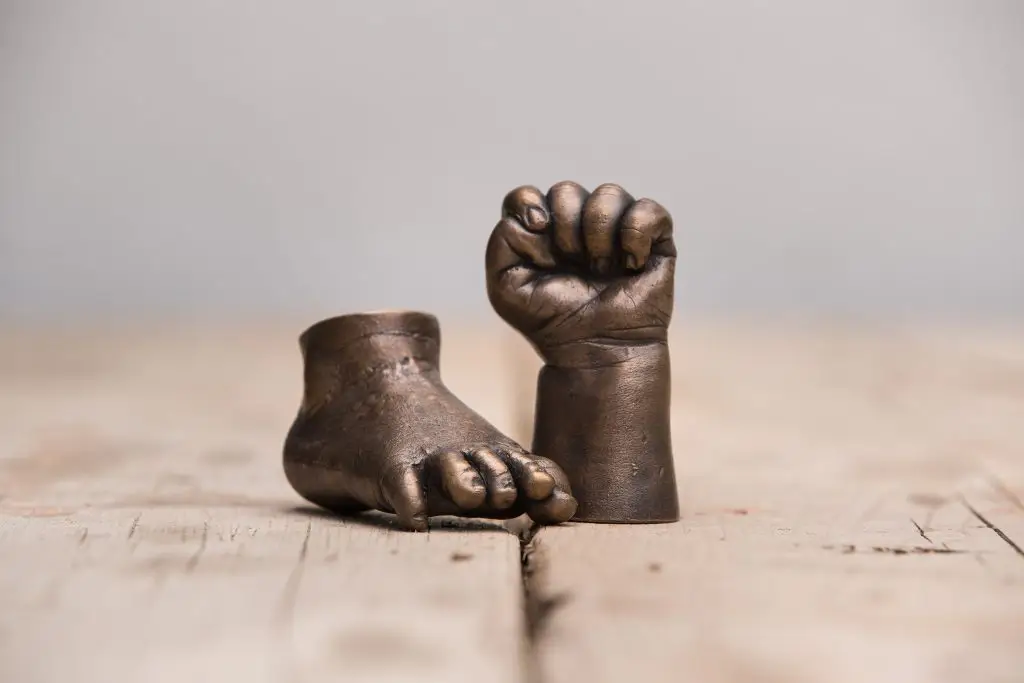
During her training, Laura learned hand and foot castings for family memorial work, as well as paw castings.
We focused on getting the technical side right while also considering the gentle handling and sensitivity that memorial work requires.
By the time Laura left Dorset, she had greater confidence in her skills and was ready to continue creating meaningful keepsakes for grieving families through Talla’s Treasures.
What Makes Bereavement Casting Different?
Bereavement casting requires a different mindset from ordinary lifecasting.
There may be strong emotions in the room, family members may be anxious or upset, and the person or pet being remembered may have passed away very recently.
For the person carrying out the casting, this means being technically prepared while also knowing how to approach each situation with patience, compassion and respect.
Training can include practical casting skills alongside considerations such as working with families, hospitals and hospices, and adapting your approach when working with infants and children.
It is this combination of technical skill and sensitive handling that makes memorial casting such a specialist area of lifecasting.

Why I Train Others to Offer This Service
Bereavement casting training isn’t just technique. It’s heart too.
I train others because I know how much these keepsakes can mean to families, and I want students to leave with more than simply having completed a course.
Every training session is tailored to the person in front of me and the type of work they hope to offer.
Some students are completely new to lifecasting. Others already work with families, hospices, charities or hospitals and want to add memorial casting to the services they can provide.
Students have travelled to my Dorset studio from across the UK and internationally, including Wales, Scotland, Jersey, Norway, Tanzania, India, Germany, Cyprus and the USA.
Training is flexible and can range from one to three days, depending on your existing experience and what you’d like to learn.
From Learning the Skills to Building Confidence
One of the most important parts of training is having the opportunity to ask questions and work through the things that can feel daunting when you’re learning something new.
Laura’s experience is a good example of this.
She already had four months of practical experience before coming to Dorset, but she wanted to strengthen her skills and become more confident in her work.
For someone completely new to lifecasting, the journey can look very different.
That’s why I don’t believe in taking a one-size-fits-all approach to training.
Some people need more time with the fundamentals. Others want to concentrate on memorial work, hand and foot castings, babies and children, or pet memorial casting.
The training is shaped around where you are starting from and where you want to go.
Funding Support May Be Available
I know specialist training is a real investment, and financial concerns can sometimes make it difficult to take that first step.
Funding opportunities vary depending on your circumstances, location and eligibility, so it’s worth checking what support may currently be available before booking training.
There are organisations and schemes that offer bursaries or financial support for eligible training, although availability and criteria can change.
If funding is something you’re hoping to explore, I’m always happy to point students towards resources that may be worth investigating.
It’s important to check the current requirements directly with each organisation before relying on funding to cover your course.
Start Your Own Bereavement Casting Journey
Laura’s story is one example of where this journey can lead.
If you’ve been thinking about learning bereavement casting, you don’t have to already be an experienced lifecaster. My training is suitable for complete beginners as well as people who already have experience and want to develop their skills further.
Training takes place at my private Dorset studio, with students travelling from across the UK and internationally.
Memorial training is £650 per day, and typically runs for one to three days depending on your experience and what you’d like to cover.
I also provide personal support before, during and after training, because learning this work is about far more than the days you spend in the studio.
If Laura’s story has made you wonder whether this could be something you’d like to explore, find out more about bereavement casting training.
There’s no pressure to book. Get in touch for a friendly conversation about what you’d like to learn and the type of work you’d like to create.
Frequently Asked Questions
Do I need prior experience?
No. My courses are designed for complete beginners as well as those looking to develop or improve their existing lifecasting skills.
How long is the training?
Training is flexible and typically takes between one and three days, depending on your experience and the areas you’d like to cover.
Can I get financial support for training?
Potentially. Funding depends on your circumstances, location and the eligibility requirements of each organisation.
Some organisations offer bursaries or financial support towards training and materials. Because schemes and eligibility can change, it’s always best to check the current requirements directly with the funding organisation.
I’m happy to point you towards funding resources that may be worth exploring.
Where does the training take place?
Training takes place at my private studio in Dorset, with students travelling from across the UK and internationally.
Can the training be tailored to my experience?
Yes. Training is adapted to your existing skills and the type of memorial work you’d like to offer. This can include family hand and foot castings, work with infants and children, hospital and hospice considerations, and pet memorial casting.
Email: info@precious-memories.co.uk
Phone: 07738 165146
Yoast SEO Settings
Focus Keyphrase: bereavement casting training
SEO Title: From Grief to Grace | Bereavement Casting Training, Laura’s Story
Meta Description: Laura travelled from Wales to Dorset for bereavement casting training after losing her dad. Discover her journey and the skills behind meaningful memorial keepsakes.
On the photos and Laura testimonial suggestions — genuinely worth doing if you have both, but only with Laura’s explicit permission, same care we applied to Libby’s story earlier today. Worth a quick message to Laura before adding anything of hers beyond what’s already public.