
#


How to Start a Flexible Keepsake Business from Home
A career that fits around your family, not the other way around
If you’re a parent looking for work that fits around childcare rather than the other way around, this is for you. As of 2026, England’s funded childcare has expanded to up to 30 hours a week from 9 months old — genuinely helpful, but it doesn’t solve the bigger problem: finding work that actually fits those hours.
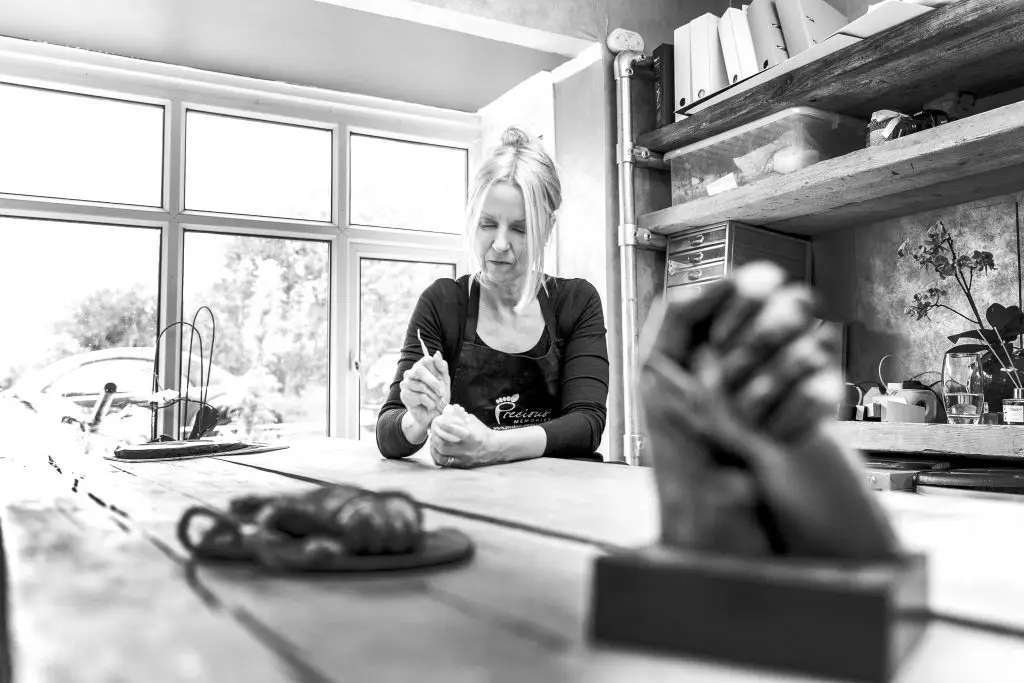
That’s exactly why I train people — mostly parents, though not always — in professional lifecasting and hand casting: baby hand and foot casts, family hand sculptures, memorial keepsakes, raised 2D tiles, belly bump casting and silver fingerprint jewellery. It’s flexible, home-based work you build entirely around your own life.
Is this you?
This is for you if you’re a parent or career-changer wanting flexible, creative, self-employed work. If you already run a baby or family-focused business and want to add a new service. If you’ve never thought of yourself as “artistic” but you’re patient, good with people, and want something that’s genuinely yours.
It’s probably not for you if you want fully passive income with no client contact, or a business with no hands-on training involved.
What you’ll learn
- 3D hand and foot casting
- Family hand casting
- Baby casting
- 2D casting and raised tiles
- Belly bump casting
- Silver fingerprint jewellery
- Working safely with casting materials
- Finishing and presenting your work
- Pricing your services
- Setting up your business
- Finding your first customers
- Trade suppliers and materials
- Marketing your new business
What it costs
Training starts from £550, depending on the course you choose, and includes hands-on 1:1 tuition with real models, trade supplier information, business guidance, and lifetime WhatsApp support.
.

What running a keepsake business actually looks like
A lifecasting business looks different to most people’s idea of “starting a business.” There’s no large stock of finished products to hold, and no premises to rent. You work from a home studio, taking bookings around your own schedule.
You will need core materials — alginate and plaster — to do the work itself. Training includes a full trade supplier list, so you know exactly what to order and where to get the best price, rather than guessing.
As a guide, baby hand and foot casts commonly sell from around £150, and family hand sculptures from £200–£400. These aren’t promises of income — they’re examples of the types of prices a trained caster may charge, depending on location, materials, design, time and experience.
Most students combine several skills — casting, tiles, belly bumps, jewellery — so they can offer more than one option and grow their business as their confidence grows.
You’re not left on your own after training
Training doesn’t finish when you leave the studio. Every student has lifetime WhatsApp support, completely free — while you practise, build confidence, and start taking on your first real customers. I’m genuinely still hearing from students years after their training, and I’m always happy to help.
Why my training speaks for itself
There’s no official regulatory guild overseeing lifecasting training in the UK — no governing body approves or certifies casters nationally. That means your own reputation, and the quality of training you actually receive, matter far more than any claimed accreditation.
I’ve been training students in lifecasting since 2004. I’m proud that real, verified reviews on TripAdvisor and Google speak for the training itself, not a badge that doesn’t really exist industry-wide.
Real students, real journeys
- Amy — trained with me in 3D casting after leaving full-time employment, wanting work that fitted around her family rather than the other way around.
- Nicole — travelled from Jersey to Dorset to train across both 3D and 2D casting.
- Aislinn — a former headteacher who trained over three days to build a genuinely comprehensive foundation before starting her keepsake business.
- Babble B — added clay impressions to her existing baby classes business, Babble Bunnies Cheshire, after childcare changes affected her client numbers.
- Rochelle — a single mum splitting her time between LA and Manchester, who built professional, international-standard keepsakes after private training.
- Jacqui — came to training burnt out from the corporate world, wanting work that was genuinely her own.
It’s rarely about ability. More often, it’s confidence, timing, or simply not knowing where to begin.

Ready to explore whether this is right for you?
You don’t need to have everything figured out before you get in touch. Tell me where you’re starting from, what you’d like to learn, and what you’re hoping to build — I’ll tell you honestly whether the training is a good fit.
Get in touch about hand casting training
Frequently asked questions
Do I need any prior experience to take your courses?
No. My courses are designed for beginners, with step-by-step guidance. I teach all the skills you need, plus how to run your business.
Is training only available in Dorset?
Yes, all hands-on training happens face-to-face in my Dorset studio to ensure personalised learning. I also offer remote mentoring and business support once you complete your course.
How long does the training take?
Most students train over 1 to 3 days, depending on the course you choose. You’ll also get ongoing support as you start your business.
Can I spread the cost of the course?
Yes. Training requires a 50% deposit to secure your date, with the remainder due a week before training starts.
Will I get help setting up my business?
Yes. Training includes business setup advice, marketing tips, and ongoing mentoring to help you succeed.
What kind of support do you offer after training?
Every student trains with me privately, one-to-one. You’ll also have lifetime WhatsApp support, completely free, for as long as you need it.
Can I combine this with a business I already run?
Yes. Many students, like Babble B, add these skills alongside an existing business rather than starting from scratch.
Do I need to buy stock or equipment before I start?
You’ll need some core materials to get started, like alginate and plaster. What you won’t need is a large stock of finished products — training includes a full supplier list with trade discounts.
How soon can I start taking customers after training?
Many students begin practising immediately. How soon you take paying customers depends on your confidence, practice time, photography, and how quickly you choose to launch.
Whatever stage you’re at, this isn’t just about beating childcare costs. It’s about building something that fits the life you actually want. Being there for your family and building a career don’t have to compete with each other.
If that sounds like what you’ve been looking for, I’d love to hear from you